
In today’s digital economy, data is no longer just a byproduct it’s a competitive advantage. When implemented strategically, data analytics transforms raw information into measurable business value: smarter decisions, faster execution, and stronger customer experiences.
This Step-by-Step Guide to the Data Analytics Implementation Process is designed for startups and enterprises looking to build scalable, secure, and high-impact analytics capabilities. Whether you’re exploring data analytics services for the first time or optimizing an existing ecosystem, this guide provides a practical roadmap to success.
At Niracore, we specialize in delivering end-to-end, scalable, and secure analytics solutions that empower businesses to unlock the true potential of their data.
What Is Data Analytics Implementation?
Data analytics implementation is the structured process of collecting, storing, transforming, and analyzing data to generate meaningful insights. It combines technology, processes, and expertise to enable data-driven decision-making solutions across the organization.
Organizations that invest in advanced analytics solutions and predictive analytics services consistently outperform competitors, unlocking new revenue streams, improving efficiency, and reducing operational risks.
As an end-to-end data analytics company, Niracore focuses on making analytics actionable, scalable, and aligned with real business outcomes.
Why a Structured Implementation Process Matters
✔ Reduces Risk and Errors
Structured workflows minimize data inconsistencies, technical failures, and costly mistakes. With proper validation and governance, businesses can proactively identify issues before they impact.
✔ Improves Decision-Making
Reliable, well-governed data ensures leadership has access to accurate insights, not fragmented reports. This leads to faster, more confident business decisions.
✔ Ensures Scalability and Long-Term Value
A strong analytics foundation supports growth. With the right architecture and tools, businesses can scale analytics initiatives without rework or disruption.
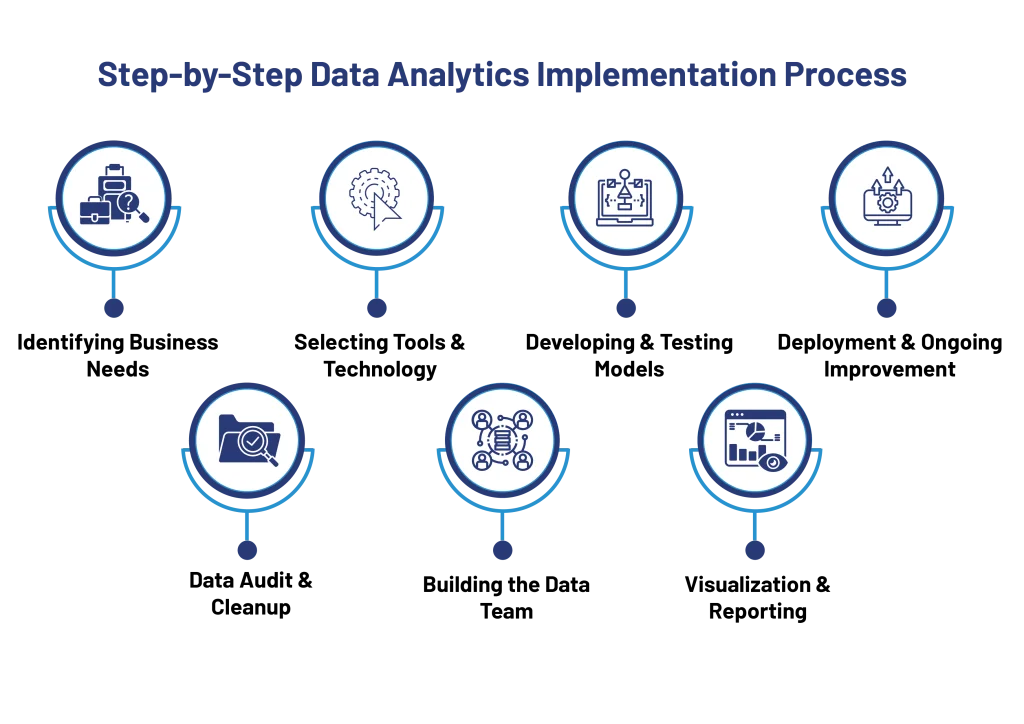
Step-by-Step Data Analytics Implementation Process
1. Understanding Business Needs
Every successful analytics journey begins with clarity.
Define Objectives
Identify what you want to achieve, revenue growth, cost optimization, customer retention, or operational efficiency. Set measurable KPIs aligned with business strategy.
Stakeholder Alignment
Ensure leadership, IT teams, and end users are aligned from day one. Early collaboration improves adoption, reduces resistance, and accelerates ROI.
2. Data Audit and Preparation
Data quality determines the success of your analytics.
Identify Data Sources
Map all internal and external data sources, CRM, ERP, marketing tools, and more, to eliminate silos.
Assess Data Quality
Evaluate accuracy, completeness, and consistency. Poor data leads to poor decisions.
Data Cleaning and Integration
Standardize formats, remove duplicates, and consolidate data into a unified system. This creates a single source of truth for reliable insights.
3. Choosing the Right Tools and Technology
Technology is the backbone of your analytics ecosystem.
Analytics Platforms
Select tools that support your business needs, from dashboards to machine learning. This is where AI and data analytics services play a crucial role.
Infrastructure Setup
Choose between cloud and on-premise environments. Cloud-based solutions offer scalability and flexibility, while on-premise provides greater control.
Scalability and Budget
Invest in solutions that grow with your business. A scalable architecture ensures long-term ROI without frequent system overhauls.
4. Building the Data Team
Behind every successful analytics initiative is a strong team.
Key Roles Include:
- Data Analysts deliver insights and reporting
- Data Engineers build and manage data pipelines
- Data Scientists develop predictive models
- Business Analysts align analytics with business goals
Outsource vs In-House
For many organizations, partnering with a data analytics consulting firm like Niracore provides faster access to expertise, especially for complex or large-scale implementations.
5. Developing and Testing Analytics Models
This is where data turns into intelligence.
Select Analytical Methods
Choose between descriptive, predictive, or prescriptive analytics based on your objectives.
Model Building and Testing
Train models, validate performance, and ensure accuracy before deployment.
Continuous Improvement
Analytics is not static. Regular iteration ensures models remain relevant as business conditions evolve.
6. Visualization and Reporting
Insights must be clear, accessible, and actionable.
Design Dashboards
Create role-based dashboards tailored for executives, managers, and operational teams.
Automate Reports
Enable real-time or scheduled reporting to reduce manual effort and improve responsiveness.
Make Data Actionable
Go beyond charts, highlight trends, risks, and opportunities. This is where data visualization services and data insights and reporting deliver real business value.
7. Deployment and Continuous Improvement
Execution determines impact.
Implement the Solution
Start with pilot testing, then scale across departments to ensure smooth adoption.
Monitor KPIs
Track performance against defined metrics to measure success and identify improvement areas.
Feedback Loops
Continuously refine dashboards, models, and processes based on user feedback and evolving business needs.
Common Challenges in Data Analytics Implementation
Even with the right strategy, organizations often face challenges:
- Poor data quality leads to inaccurate insights
- Skill gaps limit effective implementation
- Resistance to data-driven culture slows adoption
- Integration issues create data silos
Addressing these challenges requires the right technology, processes, and data analytics consulting expertise.
Best Practices for Successful Implementation
✔ Start Small and Scale Gradually
Pilot projects help validate strategy and demonstrate ROI before full-scale rollout.
✔ Involve Stakeholders Early
Collaboration ensures alignment and improves adoption across teams.
✔ Maintain Data Governance
Establish clear policies for data ownership, quality, and compliance.
✔ Focus on Security and Compliance
Implement encryption, access controls, and regulatory compliance to protect sensitive data.
Turning Data Into Business Growth
Data analytics is no longer optional it is a strategic necessity. From data analytics for small businesses to enterprise-scale transformation, organizations that invest in analytics gain a significant competitive edge.
At Niracore, we help businesses turn complex data into clear, actionable insights that drive growth, innovation, and efficiency through cutting-edge advanced analytics solutions and AI and data analytics services.
Ready to Build Your Data Analytics Strategy?
Whether you are starting from scratch or scaling existing capabilities, partnering with the right experts makes all the difference.
As a trusted provider of data analytics services, Niracore helps businesses design and implement secure, scalable, and high-performance analytics solutions tailored to their goals.
Email us: sales@niracore.com
Let’s turn your data into a powerful decision-making engine.